The care rota on the fridge
Hazel has looked after Jeff every day since his stroke. Every hour of it is written on a chart on the fridge, except the one thing she has never said.
October 23, 2026 · 6 min read
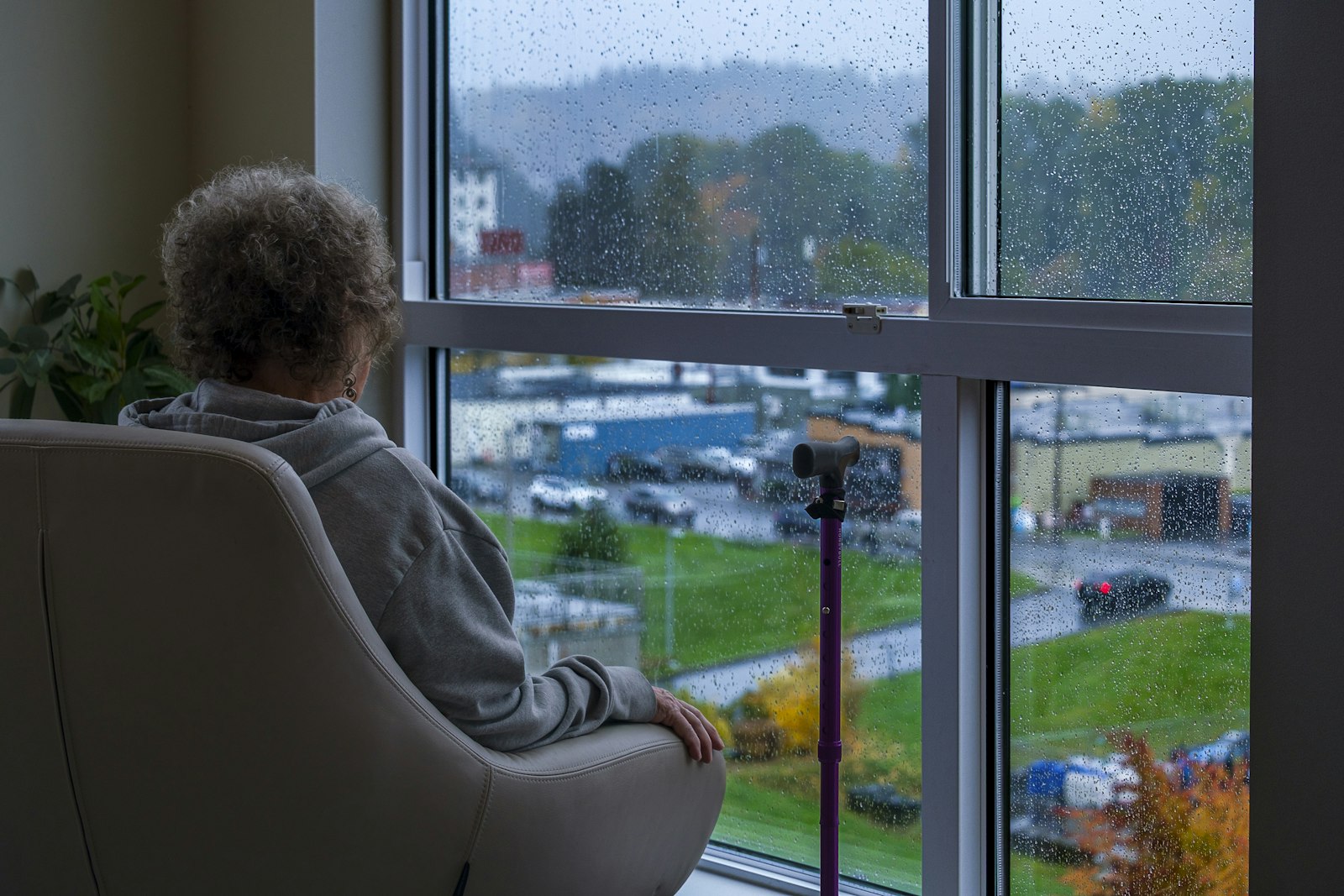
The chart on the fridge is held up with four magnets. One of them is from Llandudno, from a holiday so long ago the colours have gone grey. Hazel printed the chart at the library in the spring, when the ink ran out at home and she couldn't face going to buy more.
Jeff calls it the timetable.
What's next on the timetable, love?
He says it kindly. He says most things kindly now, the left side of his mouth arriving a beat after the right, as if it's had to run to catch up. Before the stroke he was a man who called the cat "Sir" and did all the voices when he read to the grandchildren. Some days she catches a flash of that man and it nearly knocks her over.
08:00 tablets, with food.
That means she's up at seven. Porridge on, radio low, one ear on the stairs. It's been eighteen months and she still listens for the stairs every morning, the way you listen for a baby. Four tablets out of the plastic box with the days of the week on the lids. She watches him swallow each one. He hates being watched. She hates watching. They've never once said so to each other, and they do it every single day.
Physio exercises, 20 mins.
Twenty minutes, it says. It's forty. His hand won't close round the foam ball and she's been told not to help, so she sits on the step stool with her hands pressed between her knees and counts. Eight. Nine. He swears at the ball under his breath so she won't hear, and she pretends she hasn't.
Lovely, Jeff. You're doing brilliantly.
Some days she means it. Other days it comes out of her flat, like an announcement at a station, and she hears herself and hates it a bit.
Blood pressure, before tea.
20:00 tablets.
Night: check twice.
That last one is in her own handwriting, biro, squeezed in under the printed lines. Nobody asked her to add it. She just doesn't sleep through any more. She wakes at every cough and lies there with her heart thudding, listening for the next breath, and when it comes she stays awake anyway, because by then she's awake and the ceiling is right there.
One night, standing at the fridge in her dressing gown with a glass of water, she noticed something. There's nothing on the chart for Hazel. Not one line.
It isn't anyone's fault. It's a chart about Jeff. That's what it's for.
I came across a study a while ago that I haven't been able to stop thinking about, and it's the reason I wanted to write about Hazel at all.
In 1999 two researchers, Richard Schulz and Scott Beach, published a paper in JAMA that followed older married people over several years. Some of them were looking after a husband or wife who was ill or disabled, and some weren't. The people who were caring for a spouse, and who said the caring was a strain on them, were noticeably more likely to have died by the end of the study than people who weren't caring for anyone.
What got me was the detail underneath. Caring on its own didn't raise the risk. People who were caring and coping didn't fare worse. It was the strain that did it. The weight of it, carried day after day with nobody taking a corner.
Hazel would never call it strain. She'd say she's a bit tired. And you don't complain about being tired, do you, when your husband has to stop and think about which way to turn a door handle.
Thursday: carer 10 till 12.
Two hours. The only two on the whole chart that are hers.
Every week she means to do something sensible with them. The bank. The optician, who she's cancelled twice now. Last Thursday she drove to the library instead and sat in the café upstairs with a scone she didn't touch, flicking through the seed packets on the rack by the till. Sweet peas. Runner beans. She used to grow both, up canes along the back fence, and Jeff used to tease her that the sweet peas were planning a takeover. She cried a little into a paper napkin. Not much. Just enough that the girl behind the counter looked away, kindly. She was home by quarter to twelve, so the carer wouldn't think she was the sort of wife who stays out.
That evening Jeff watched her across the table while she cut his chicken into small pieces.
You alright, love?
Fine.
The word just sat there between them, next to the salt.
It was later, in bed, in the dark where these things are easier, that she said it. She hadn't planned to. It came out on its own.
I'm tired, Jeff.
That was all. Her voice came out smaller than she'd meant it to.
He didn't say anything for a long time. Long enough that she thought he'd dropped off. Then his good hand came across the sheet and found hers.
I know, he said. I'm sorry.
Don't be sorry.
And then she lay there, because she didn't know what she wanted him to be instead. Not sorry. Not ill. Not someone she had to look after. She wanted him to be the man who called the cat Sir, and she couldn't say that either.
Atul Gawande writes in Being Mortal about how, when someone we love is ill, we get very good at asking how to keep them safe and we forget to ask what makes their life worth living. Reading it, I kept thinking that question belongs to the carer too. Hazel is safe. She isn't sure about the rest.
In the morning it was porridge and four tablets, the same as always. But on her way past the fridge Hazel picked up the biro and wrote her own name next to Thursday. Small, in the margin, where you'd only see it if you were looking.
She hasn't crossed it out. She hasn't decided what it means yet, either. Maybe it's just two hours. Maybe it's the start of asking for more.
The person on the chart isn't the only one who needs looking after.
Keep reading

The name that keeps coming up
Fern has a new colleague she mentions most evenings. Romy has said nothing about it, and has started doing something she would never admit to.
4 min read

The ledger
She can tell you who drove home from every wedding since 2019. He does not know the book exists. A 1979 study explains why keeping it is quietly costing her.
4 min read

You are not as obvious as you think
She has been signalling for three months that something is wrong. He has noticed that she has been tired. A 1998 experiment explains the gap.
3 min read
Comments
Loading comments…